

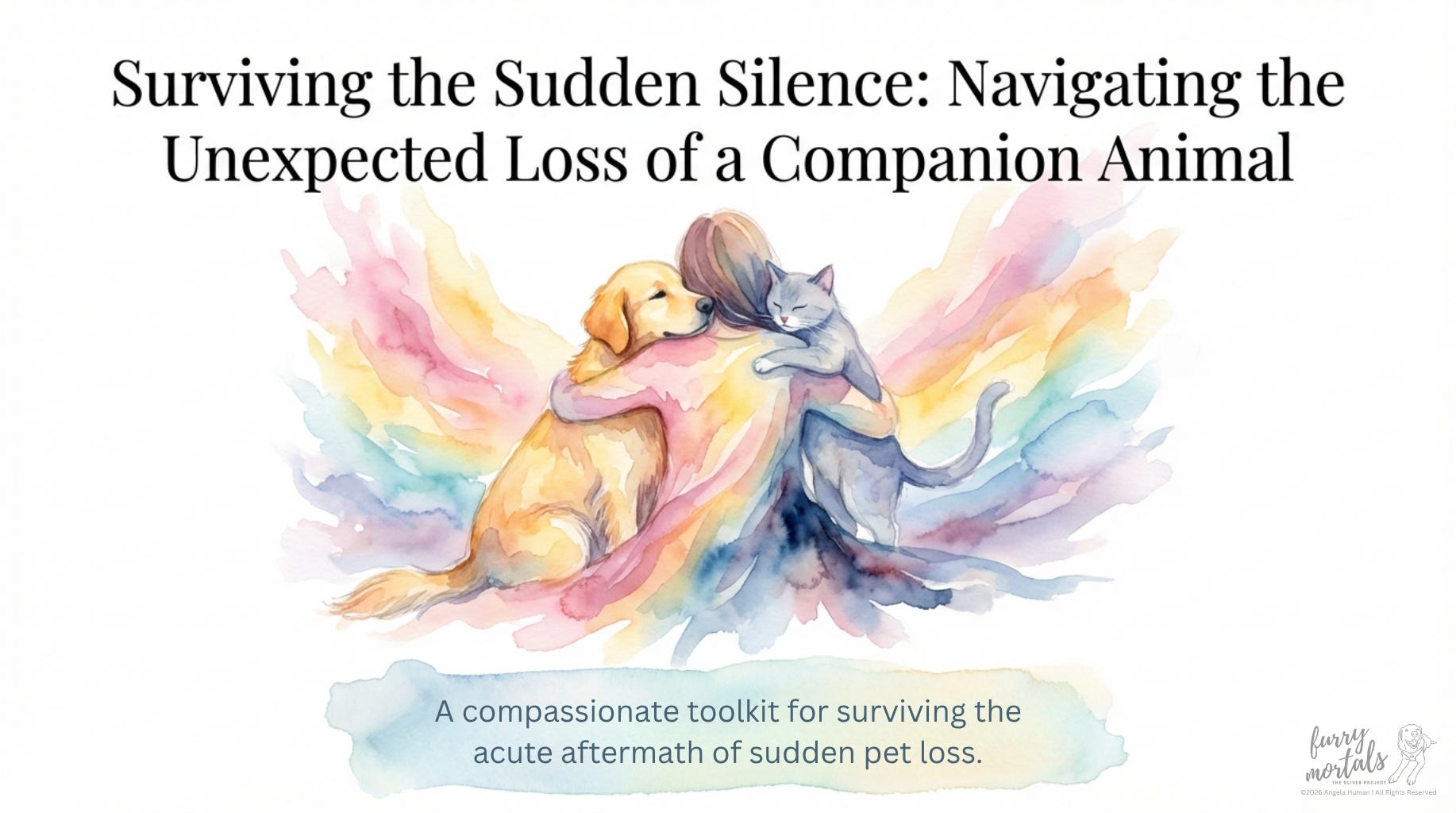
The silence in a house after an unexpected loss isn’t just quiet; it’s heavy. It’s a physical weight that sits where a bed used to be or leans against the door where they used to wait for you.
When we lose a companion suddenly—as I did with my Lab/Catahoula mix, Oliver—the world expects us to follow a neat little map of healing.
We’ve all seen the “Stages of Grief” charts that look like an orderly staircase. But when a sudden cardiac event or a terminal crisis strikes, that map isn’t just useless; it can actually harm your grief journey.
The Theft of the “Lasts”
Sudden loss steals the time required to process. With Oliver, there was no “bucket list” weekend. There was no final steak dinner planned for sunset on the beach, and no slow walks through his favorite park to say goodbye to the trees.
When loss is sudden, you aren’t just grieving a life; you are grieving the loss of the goodbye as well. You are left grappling with the profound trauma of a sharp dividing line—a moment where life was normal at 10:00 AM and shattered by 11:00 AM.
The Real Order of Operations: Anger and Guilt
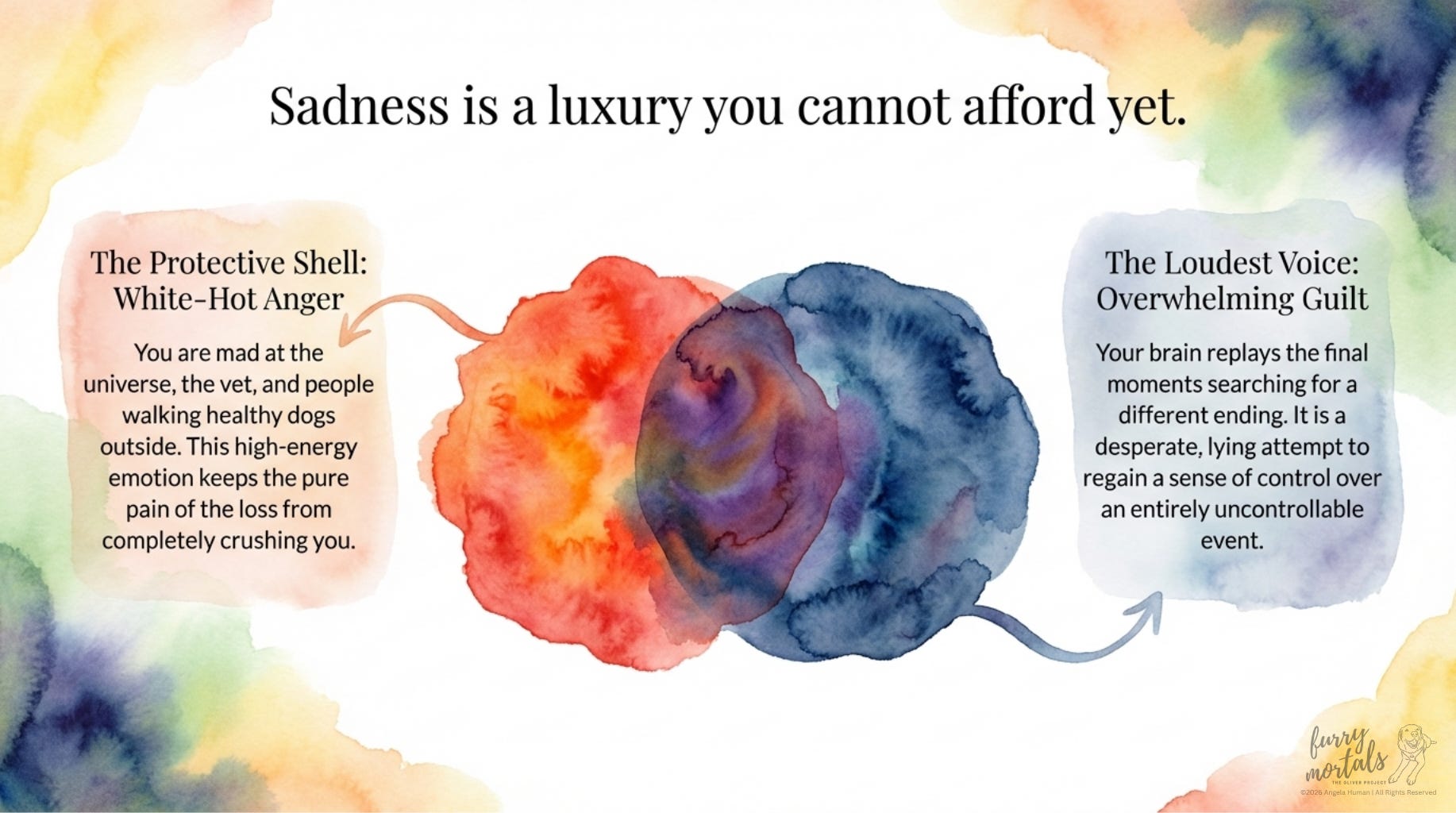
In a standard loss, people talk about sadness first. But in an unexpected loss, sadness is often a luxury you cannot afford yet. Instead, you are hit by two giants:
White-Hot Anger: You are mad at the universe, the vet who couldn’t fix it, and even people walking healthy dogs outside. This high-energy emotion acts as a protective shell, keeping the pure pain from completely crushing you.
Overwhelming Guilt: This is the loudest voice, replaying the final moments like a film while searching for a different ending. It is a desperate attempt to regain a sense of control over an entirely uncontrollable event.
You have to burn through the anger and drown out the guilt before you can even begin to mourn. Mourning is the soft part—the crying over the collar—but you can’t get there while the jagged edges of “Why?” and “How?” are still tearing at you.
Unconventional Ways to Survive the Aftermath
We aren’t going to talk about “living in the now,” because when your heart is ripped out, “the now” is a terrible place to be. Here is what you can actually do when the grief is fresh and furious:
The “Legal Defense” for Your Soul
Combat the relentless prosecutor of your own guilt by reviewing the evidence to acquit yourself of failure. Acknowledge that at the time of your decisions, you did not have the benefit of hindsight. Document your lifetime of high-quality care, nutrition, and endless belly rubs. One singular moment of medical crisis does not negate a lifetime of love.
The “Go-Bag” Triage Strategy
Manage your physical environment by separating items that trigger a sudden crash from those that bring comfort. Place highly triggering items, like the empty food bowl, into a “Go-Bag” and move them out of your direct walking path so you aren’t “tripped” by the sight of them every five minutes. Do not force yourself to discard them yet; the desire for a tangible link often returns once the shock subsides.
Burn Through the Adrenaline
High-energy grief requires physical release—you need to move the trauma out of your body. Anger needs a circuit. Smash cheap ceramic plates in a safe spot or vigorously shake your arms and legs to discharge adrenaline. Pressing into a sturdy wall with full force can also help re-engage your body’s sense of agency.
Save the “Boring” Memories
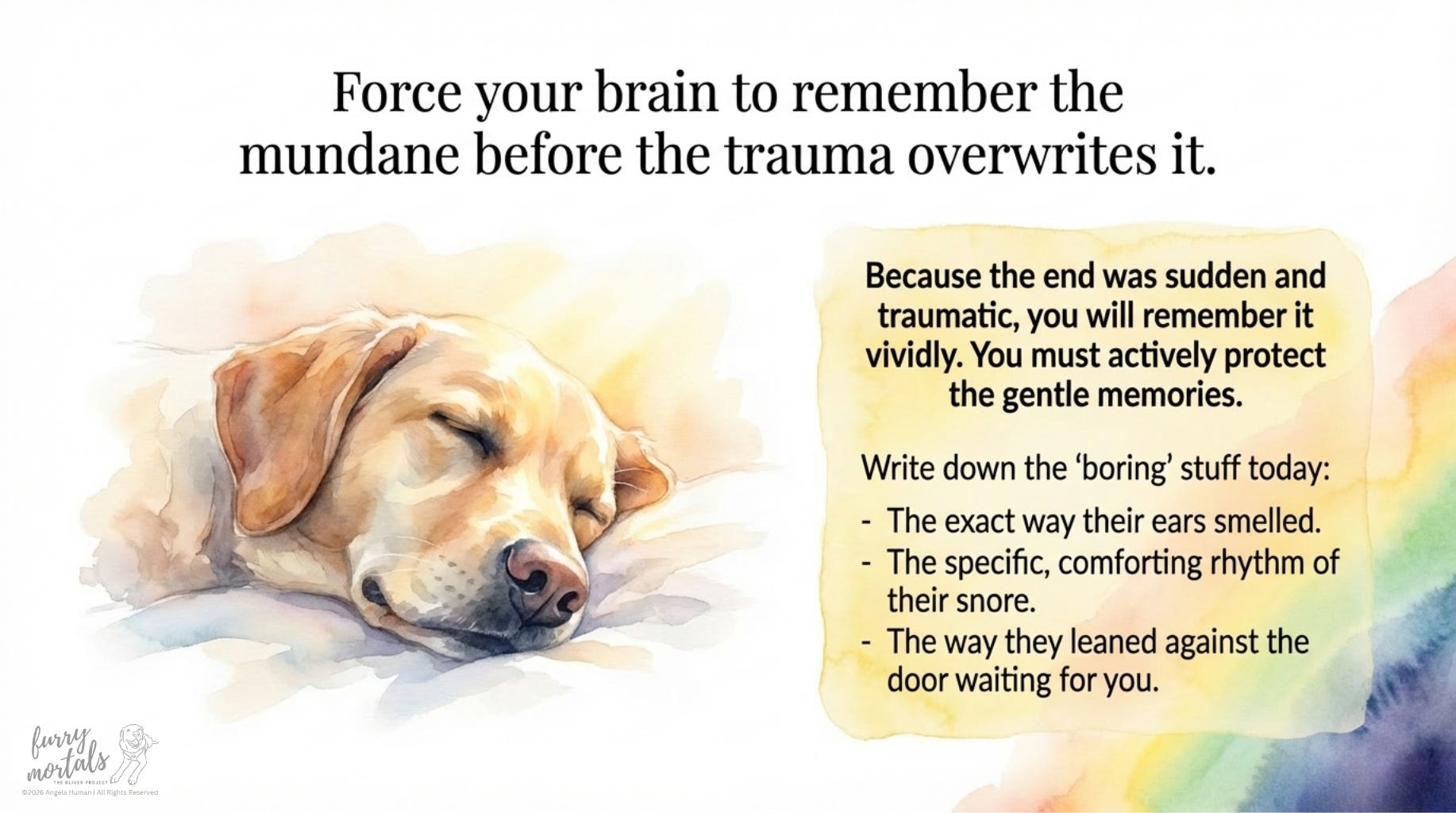
Because the end was traumatic, your brain will remember it vividly. You must actively protect the gentle memories before the trauma overwrites them. Write down the mundane stuff today: the exact way their ears smelled, the specific rhythm of their snore, or the way they leaned against the door.
The Work of a Lifetime
The goal of grieving a furry mortal is not to let go, but to evolve the relationship. You are transforming a physical relationship into a profound spiritual and emotional one. You don’t “get over” it; you simply get used to carrying the weight, building a larger, compassionate life around the memory of your companion.
Oliver didn’t get his last steak, and I didn’t get my final afternoon of peaceful cuddles. But 13 years of beautiful Tuesday nights and Saturday mornings are not erased by one bad day. The suddenness of the end cannot rewrite the magnificence of the bond.
The love was the work of a lifetime, not just the final day.
So beautifully stated: The suddenness of the end cannot rewrite the magnificence of the bond.